
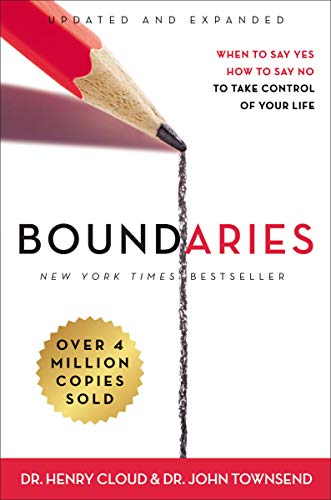
In marriage, love often feels like the unifying force that holds everything together. But even love needs structure to grow in a healthy way. That’s where boundaries come in. As Dr. Henry Cloud and Dr. John Townsend explain in their book Boundaries, “Boundaries define where you end and someone else begins.” These invisible lines are not about control or distance — they’re about clarity, respect, and freedom. When we understand boundaries in marriage, we start to see them not as walls that divide us, but as frameworks that strengthen love and marriage. Healthy boundaries protect what matters most while allowing both partners to remain emotionally and spiritually whole.
What Boundaries Protect
Boundaries are the limits we set to protect our emotional, mental, physical, and spiritual well-being. In marriage, they help us love without losing ourselves. Emotional boundaries mean respecting each other’s feelings and personal experiences — you can empathize with your spouse’s struggles without taking responsibility for their emotions. Time and energy boundaries involve balancing work, family, and personal rest; you can’t pour from an empty cup, and setting time aside for self-care or solitude strengthens, not weakens, the relationship. Spiritual boundaries protect your individual connection with God — each partner’s faith journey is personal, and honoring that individuality can deepen mutual respect and understanding.
As Cloud and Townsend remind us, boundaries allow us to “own” our thoughts, feelings, and behaviors, rather than expecting someone else to fix or fulfill them. This ownership is key to a mature and loving partnership.
When Boundaries Are Missing
When boundaries are missing, love can become tangled with control, resentment, or burnout. Without clear lines, couples often fall into patterns of over-functioning (doing too much) or under-functioning (depending too much). Over time, this imbalance erodes trust and emotional safety.
Dr. Cloud and Dr. Townsend offer a powerful truth: “Love without truth is enabling, and truth without love is harsh.” Boundaries help couples hold both love and truth together. They create a safe environment for honesty, accountability, and grace. Think of marriage like a garden. Without boundaries, weeds — like resentment, exhaustion, or unhealthy habits — can easily take root. But when you protect that garden through healthy boundaries, love has space to grow freely.
This scripture reinforces the principle: “Above all else, guard your heart, for everything you do flows from it.” — Proverbs 4:23. Guarding your heart doesn’t mean shutting your spouse out; it means tending to your emotional and spiritual health so you can love more deeply and intentionally.
Setting Boundaries in Practice
Setting boundaries takes practice and, most of all, courage — but it’s one of the most loving things you can do for yourself and your marriage. It begins with identifying your personal limits and learning to communicate them clearly. Awareness is the first step toward understanding what drains or overwhelms you.
Communicating openly and using “I” statements such as, “I feel overwhelmed when…” instead of “You always…” shifts the focus from blame to ownership. This active step is critical. Practicing how to say “no” kindly but firmly is also essential, as boundaries are often tested through requests for time or energy. Saying “no” with kindness preserves both your well-being and your relationship. Couples should also create safe spaces for honesty, encouraging open dialogue where both partners can speak without fear of judgment or retaliation. Fostering mutual respect and accountability allows emotional safety and trust to flourish.
Boundaries are not about changing your spouse — they’re about becoming a healthier version of yourself. When each partner takes responsibility for their own emotions and actions, intimacy deepens and conflict decreases. Understanding, establishing, and maintaining boundaries in marriage helps couples love freely while preserving individuality. Healthy love is not about merging into one indistinguishable person; it’s about two whole people choosing one another every day with respect, honesty, and grace.
As you work on setting boundaries in your marriage, remember that this is an act of love, both for yourself and for your spouse. And as Cloud and Townsend write, “The best boundaries are built out of love.”
Stay tuned for Part 2, where we’ll explore how to maintain boundaries, stay accountable, and model these healthy habits for your children.
References
- Dr. Henry Cloud and Dr. John Townsend, Boundaries: When to Say Yes, How to Say No to Take Control of Your Life
- Proverbs 4:23